Funding the Clean Power Build-out

David Walker, head of infrastructure consents at Carter Jonas, argues that Britain's energy transition depends not just on raising money but on building confidence in policy, consenting and coordination so that capital can flow quickly into projects that can actually be built.
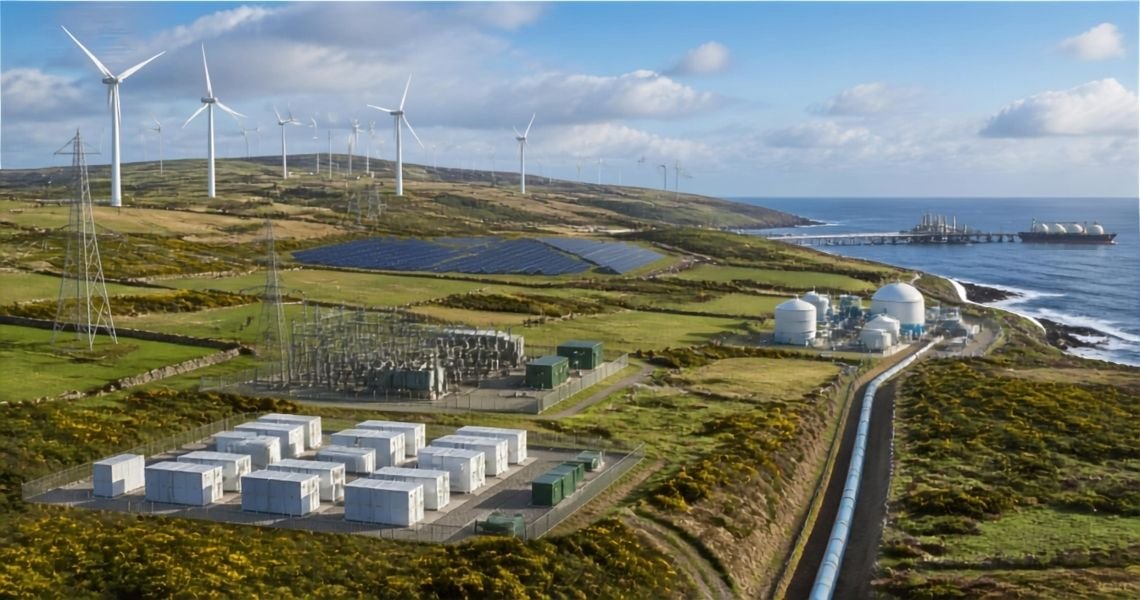
Successive governments have shared the same broad goals: decarbonising power, improving energy security, electrifying heat and transport and supporting growth. Meeting them requires renewing ageing assets, reinforcing networks and building low-carbon generation, storage and flexibility. That means substations, power lines, cables, solar and wind farms, batteries, hydrogen and carbon transport infrastructure, all of which affect landscapes, habitats, roads and communities. Funding, planning and environmental consent are therefore one challenge rather than three.
The sector has mostly adapted familiar funding models rather than inventing new ones, which suits investors facing higher interest rates, volatile supply chains and construction inflation. Contracts for Difference remain central for mature renewables because they reduce exposure to volatile wholesale prices. But they suit assets with predictable output sold as electricity, not those whose value lies in grid resilience or enabling other connections. Regulated models, state-backed guarantees and public co-investment have therefore grown in importance, reflecting risks the market cannot price at the outset.
On consents, Walker notes that national need is often felt as local impact. Grid reinforcement is essential but visible and contested, and a bankable project can still stall if land, ecology, planning and community engagement are treated as late obstacles. Storage, hydrogen and carbon transport face similar issues where revenue models are uncertain and consenting is slow.
He calls for disciplined use of existing funding tools, durable policy that avoids reopening settled questions, realistic public-sector sharing of risks such as strategic network investment and novel technologies, and earlier integration of finance, planning, land, ecology and engagement. Britain's institutions and capital markets are strong, he concludes, but finance alone will not deliver the transition.
Source: Carter Jonas - Building Consultancy, originally published on The Landsite (15 August 2026)